

When your house is messy, the hardest part usually isn’t the cleaning—it’s deciding what to do first. Most people start scrubbing something small (a stovetop burner, a shower corner), then look up and realize the home still feels chaotic. You worked, but nothing changed.
The fix is simple: stop thinking in terms of “clean everything,” and start thinking in terms of sequence. In Cincinnati homes, the biggest difference we see between people who get stuck and people who get traction is whether they follow a reset-first order that creates visible wins quickly.
And one important note before we start: it’s normal to fall behind on housework, especially when busy with other things. We don’t judge—we simply help you get your house clean.
The mindset shift that makes everything easier
A messy home is usually a combination of two problems: stuff in the way and dirt that’s built up from everyday living without proper cleaning. If you tackle the dirt while the stuff is still everywhere, you’ll feel like you’re losing.
Here’s the rule we follow every time:
You can’t clean clutter. You can move it, pile it, or wipe around it—but real cleaning happens after there’s space to clean.
So the goal is to do a quick reset first (clear enough to work), then do a focused clean (remove dirt efficiently). That’s how you avoid the “I cleaned all day and nothing looks better” feeling.
Looking for a Move out Cleaning Checklist? Click here to read more.
Where you should begin (and why it works)
Most of the time, the best starting point is the kitchen sink and one counter. It’s the highest-leverage area in the house because dishes and food mess create stress fast, and a clean sink becomes your “home base” for everything else—wiping, rinsing cloths, filling a bucket, and making quick progress.
That said, there are a few situations where starting somewhere else makes more sense. Use this quick decision guide:
-
If there’s trash everywhere or smells, start with a trash sweep first.
-
If there’s nowhere to walk or sit, start by clearing a walkway and one seating area in the living room.
-
If a bathroom is the biggest stressor, do a quick toilet + sink reset there first, then move to the kitchen.
You’re not choosing the “perfect” first room. You’re choosing the room that creates the fastest relief and momentum.
The 60-minute triage plan (the order we use)
This is your “I need the house to feel better today” plan. The timer matters—overwhelm comes from feeling like the job will never end. A time-box gives you a finish line.
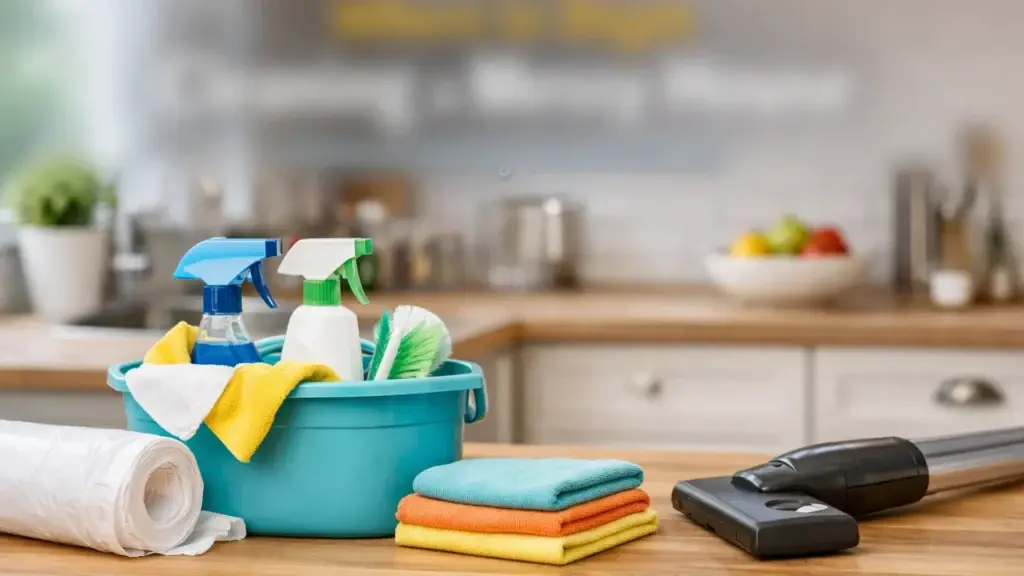
You don’t need a cabinet full of products. You need a few basics and a simple order.
Grab:
-
Trash bags
-
A laundry basket/bin (for “belongs elsewhere” items)
-
Microfiber cloths
-
All-purpose cleaner (or dish soap + water in a spray bottle)
-
Vacuum or broom
Now follow this sequence:
Minute 0–10: Trash sweep
Walk through the main areas and remove obvious trash only. Don’t organize. Don’t sort. Just clear the easiest “visual noise.”
Minute 10–25: Dishes + sink reset
Load the dishwasher or stack dishes neatly. Clear the sink. Wipe the sink and the most visible counter. This is usually the first moment the home starts to feel less overwhelming.
Minute 25–40: One visible surface zone
Pick one area you see constantly—kitchen counters, dining table, or the coffee table area. Use the basket to collect items that belong elsewhere. Don’t put them away yet. Just clear the space.
Minute 40–50: One bathroom quick-pass
This is not a deep clean. It’s a reset. Do the toilet (quick scrub + wipe exterior) and wipe the sink/counter.
Minute 50–60: Floors in high-traffic areas
Vacuum or sweep the main walkways and living areas. Floors come last because everything falls down there as you work.
After 60 minutes, you shouldn’t expect perfection. You should expect the home to feel more livable—less sticky, less chaotic, and easier to continue.
The 15-minute “panic reset” (when you’re wiped out)
On your busiest days, you don’t need a full plan—you need a quick stop-the-bleeding routine. This one prevents tomorrow from being worse, and it still gives you a win.
-
5 minutes: trash only
-
5 minutes: clear the sink (or stack dishes neatly)
-
5 minutes: pick up floors in one room (walkway + seating)
Then stop. A small completed reset beats an abandoned two-hour plan.
The half-day catch-up plan (when you want real progress)
If you have 3–4 hours, don’t try to “clean the whole house.” That’s how you get exhausted and frustrated. Instead, choose three anchor wins that change how the house feels:
-
Kitchen reset + wipe-down
-
Bathrooms (as deep as time allows)
-
Floors throughout
If you still have time after that, choose just one bonus zone—primary bedroom, living room, or laundry (only if you can finish a full cycle). This keeps you from scattering your effort across ten half-finished tasks.
The pro order of operations (so you don’t redo work)
Once your surfaces are clear enough to actually clean, the most efficient order is simple: top to bottom, dry to wet, floors last. It prevents rework and makes your effort show.
Here’s how that looks in real life:
-
Clear surfaces and do quick dry wiping first (crumbs, dust, hair)
-
Then do wet work (sprays, scrubbing, mopping)
-
Finish with floors, after everything else has fallen down
If you mop early, you’ll walk over it 20 times, drop more debris, and feel like your floors “never stay clean.”
What we see in real Cincinnati homes
One thing we wish more people knew: most messy houses aren’t “hopeless.” They’re just stuck in the wrong order. When we walk into a home that feels overwhelming, it’s usually because the visible areas are buried and the basics (kitchen + bathrooms + floors) have fallen behind from normal day-to-day living.
When we reset the kitchen anchor first and finish one visible room to “done,” the home looks dramatically better fast. And when clients keep it from bouncing back, it’s rarely because they found a magic product—it’s because they picked one small habit that happens consistently, like resetting the sink and counters at night.
The most common mistakes that keep people stuck
You don’t need to be perfect—you just need to avoid the traps that waste effort.
-
Deep-cleaning details while the house is still cluttered
-
Starting in the hardest room (you stall out and quit)
-
Organizing mid-clean (that’s a separate project)
-
Using too many products (you slow down and overthink)
-
Trying to do the entire house in one session (burnout cycle)
If cleaning feels like it “doesn’t work,” it’s usually a plan problem, not a motivation problem.
Frequently Asked Questions
Should I start upstairs or downstairs?
Start where you’ll see the win most (often kitchen/living). If you have multiple floors, finish one “anchor” zone first, then move.
What if my whole house is cluttered?
Do a containment reset: trash + dishes first, then baskets for “belongs elsewhere.” Cleaning comes after.
What if I only have energy for one thing?
Clear the sink. It’s the highest-leverage reset point in most homes.
Ready to stop playing catch-up?
If you’re behind on cleaning, you’re not alone. It’s normal to fall behind—especially when life gets busy. We don’t judge. We simply help you get your house clean.
The easiest path is usually:
Reset Clean: best if things have built up and you want a clean slate.
Recurring Cleaning (weekly/biweekly): best if you want the house to stay consistently clean without weekend marathons.
Book online and choose what fits best for your home.